Go Back
What Is Time-First Planning? A New Way to Think About Time
Time-First Planning is a planning approach that starts with time spans instead of days or tasks. Learn how thinking in timelines creates long-term clarity.


Time-First Planning is a different way to think about planning. Instead of starting with individual days, dates, or tasks, it starts with time itself - with longer spans, phases, and periods that shape real decisions.
This approach challenges how most planning tools and methods work today. And it explains why many people feel busy, yet unclear.
The Problem With How We Plan Today
Most planning systems are built around days.
Calendars, to-do lists, and productivity apps ask the same questions:
What needs to be done today?
What's scheduled for this date?
What's next on the list?
This works well for short-term execution. But it breaks down when decisions extend beyond a few days. (It's also why traditional calendars struggle with long-term planning.)
Important decisions don't happen in isolation. They unfold over weeks, months, and entire years.
When planning focuses only on days, it becomes fragmented. Context is lost. Long-term consequences are hard to see.
What "Time-First Planning" Means
Time-First Planning is an approach that puts time spans before individual dates.
Instead of asking "What happens on this day?", it asks:
What phase am I in?
How long does this last?
What overlaps with what?
How does this period affect what comes next?
In Time-First Planning:
Time spans matter more than single points in time
Duration matters as much as timing
Relationships between periods become visible
It is planning that reflects how life, work, and progress actually happen.
Time Spans vs. Dates
A date is a point in time.
A time span has meaning.
People naturally think in spans:
a training cycle
an exam phase
a project timeline
a recovery period
a school year
Dates mark moments. Time spans define experiences.
When planning ignores spans, it misses structure. When planning starts with spans, structure becomes clear.
Why Time-First Planning Matters for Long-Term Decisions
Long-term decisions are rarely about a single action. They are about sequences, overlaps, and trade-offs over time.
Without a time-first perspective:
commitments silently overlap
capacity is overestimated
progress feels uneven or unclear
Time-First Planning makes these patterns visible.
It allows people and teams to see:
when things realistically fit
where conflicts emerge
how effort is distributed across time
Clarity doesn't come from more detail. It comes from better perspective.
How Time-First Planning Is Applied in Practice
In practice, Time-First Planning often uses:
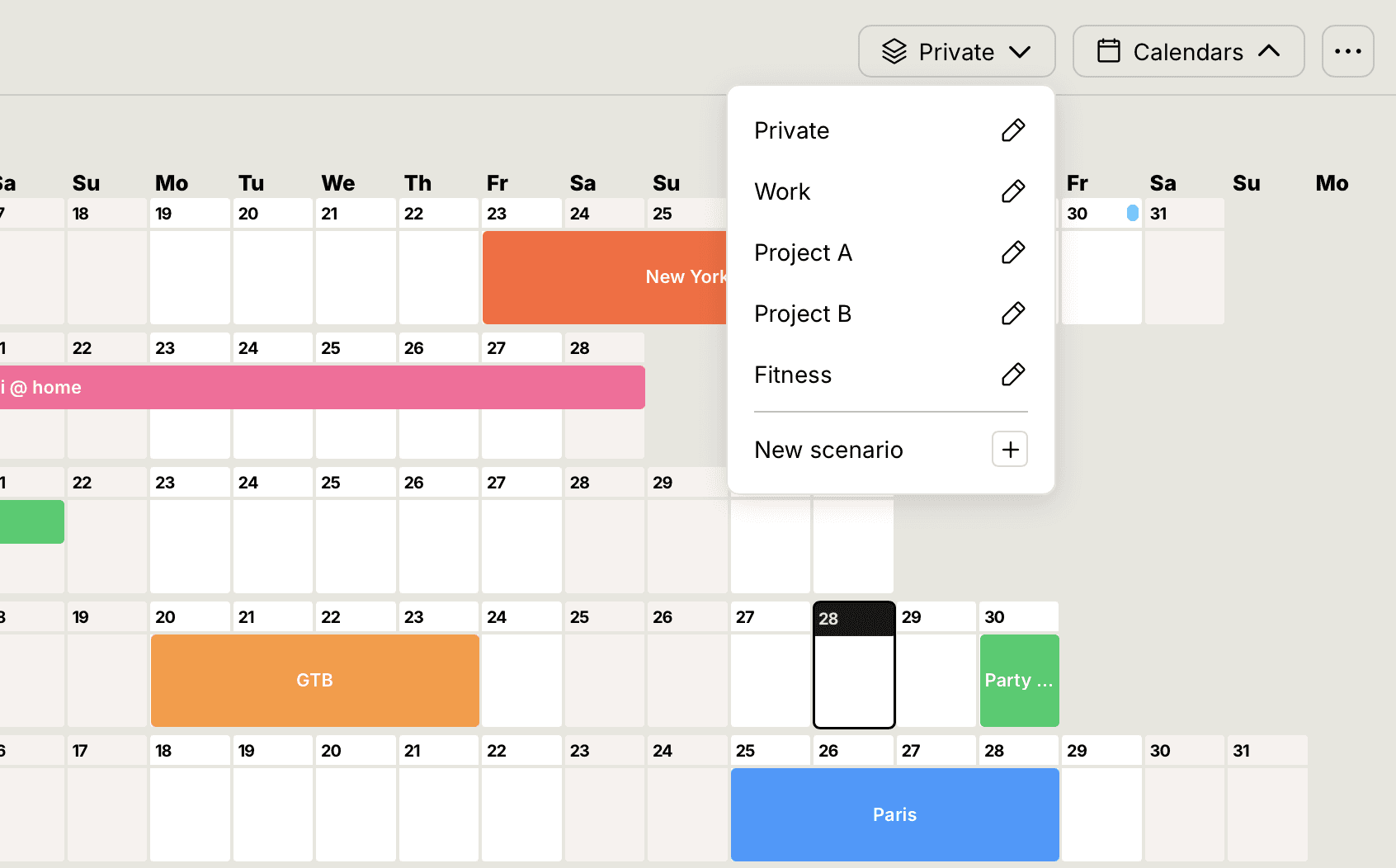
visual representations of phases and periods
The goal is not to plan more - but to see better.
This is why tools built around timelines and long-term views exist. They support decisions that go beyond today or tomorrow.
A Shift in How We Think About Planning
Time-First Planning is not about productivity tricks or optimization.
It is a mindset shift:
from tasks to time
from days to durations
from activity to clarity
When people see time differently, they plan differently. And when they plan differently, decisions become calmer, clearer, and more intentional.
That is the core idea behind Time-First Planning.
Frequently Asked Questions
What is time-first planning? Time-first planning is an approach that starts with spans of time, phases, periods, and durations, instead of individual days, dates, or tasks. It focuses on how long things last and how periods relate to each other, which makes long-term structure clearer than a day-by-day view.
How is time-first planning different from using a calendar? A calendar is built around days and appointments and answers "what happens on this date?". Time-first planning starts one level up, with weeks, months, and the whole year, asking what phase you're in, how long it lasts, and what overlaps, so long-term patterns stay visible.
What's the difference between a date and a time span? A date is a single point in time; a time span has duration and meaning, a training cycle, a project, a school year. People naturally think in spans, and planning becomes clearer when it starts there rather than with isolated dates.
Why does time-first planning help with long-term decisions? Long-term decisions are about sequences, overlaps, and trade-offs over time. A day-focused view hides these, so commitments quietly overlap and capacity gets overestimated. A time-first view makes them visible, so you can see when things realistically fit and where conflicts emerge.
What tools support time-first planning? Time-first planning is usually applied through timeline-based and year-at-a-glance views that show phases and periods visually. AnnuCal is built around this idea, with a horizontal 12-month view designed for long-term clarity rather than daily scheduling.
👉 Ready to plan time-first? Start with a year-at-a-glance view in AnnuCal.