Go Back
Why Traditional Calendars Fail at Long-Term Planning
Traditional calendars are built for days, not time spans. Learn why calendar-based planning breaks down for long-term decisions and yearly clarity.

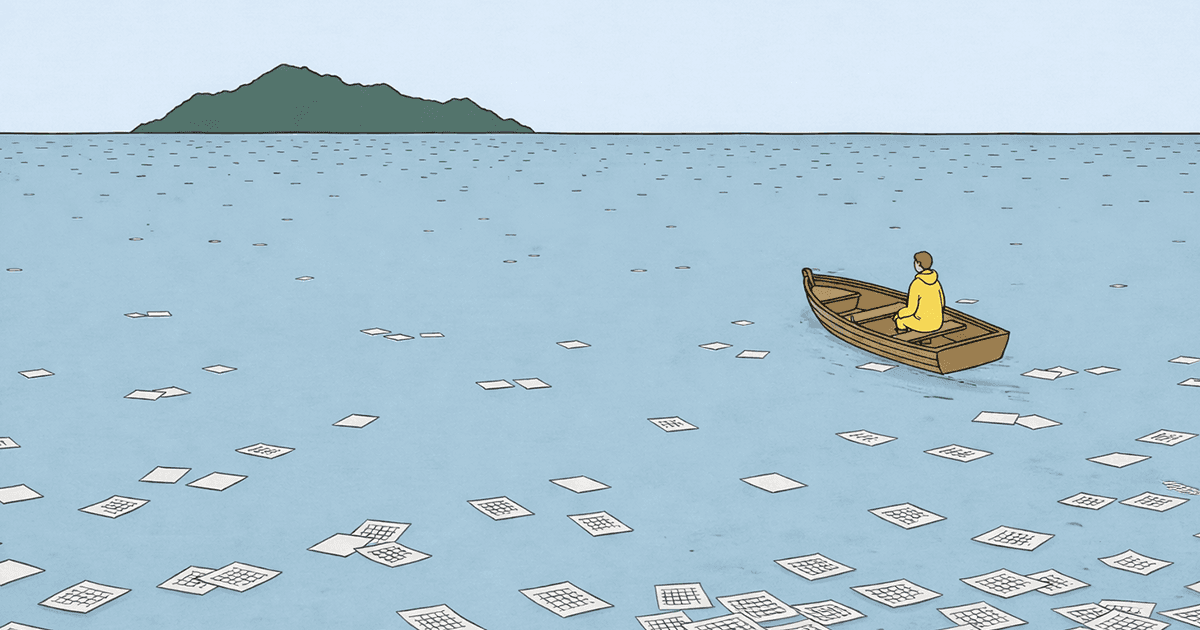
Traditional calendars fail at long-term planning because they are built around days, not time spans. They are excellent for appointments and short-term execution, but they hide how months connect, let commitments overlap unnoticed, and never show how full a year really is. Long-term clarity needs a view built around periods, not individual dates.
Calendars are everywhere. They help us remember meetings, appointments, and deadlines. For short-term coordination, they work well.
But when it comes to long-term planning, traditional calendars quietly break down.
Not because they are poorly designed - but because they were never meant to handle the way people actually plan over months and years.
Calendars Are Built for Days, Not Time Spans
At their core, calendars are day-based systems.
They answer questions like:
What happens on this date?
What time does this event start?
What's scheduled today or this week?
This makes calendars excellent for execution.
But long-term planning doesn't start with days.
It starts with periods.
Projects, goals, vacations, academic terms, training cycles, and life phases all stretch across time. They are not isolated moments.
When planning begins at the day level, the bigger structure disappears.
The Illusion of Control
Traditional calendars give a feeling of order.
Everything is neatly placed on dates. Nothing seems to overlap - until it does.
The problem is not missing information. It's missing perspective.
A monthly view hides how months connect. A weekly view hides what comes next. Scrolling hides the relationship between periods.
The result is an illusion of control:
Commitments overlap without being obvious
Capacity is overestimated
Recovery time is forgotten
Calendars don't show how full a year really is.
Why Long-Term Conflicts Go Unnoticed
Most conflicts don't happen on the same day.
They happen across time:
Travel right before deadlines
Intense work phases without breaks
Overlapping projects in different months
Day-based views scatter this information.
Even when everything is technically "visible," it is not understandable.
Humans don't naturally piece together dozens of dates into a mental timeline. We need structure, not fragments.
Short-Term Views Encourage Reactive Planning
When planning tools focus on the near future, planning becomes reactive.
Decisions are made based on what's immediately visible:
This week
This month
The next deadline
Long-term consequences are pushed aside - not intentionally, but structurally.
Over time, this leads to:
Crowded schedules
Unclear priorities
Constant adjustment instead of deliberate planning
Calendars don't encourage long-term thinking. They reward short-term optimization.
Time Needs Shape, Not Just Slots
Time is not a list of empty boxes.
It has rhythm:
Busy seasons
Quiet periods
Preparation phases
Recovery windows
Traditional calendars flatten time into identical days.
They don't show momentum. They don't show flow. They don't show how one period affects the next.
Without shape, planning turns mechanical.
What Long-Term Planning Actually Requires
Effective long-term planning requires:
Understanding duration, not just dates
Recognizing overlaps and gaps
Making trade-offs visible
These are not secondary features. They are foundational.
When tools are built around days, these needs remain unmet.
Beyond the Calendar Mindset
The limitation is not calendars themselves - but the mindset behind them.
Calendars assume:
Time is best understood day by day
Planning happens close to execution
Long-term clarity requires the opposite:
Starting with the year
Thinking in phases
Seeing time as a continuous flow
This is where new planning approaches emerge.
A Different Starting Point
When planning starts with time spans instead of dates, decisions change.
People plan calmer. They plan more realistically. They see consequences earlier.
Traditional calendars weren't built for this.
That's why long-term planning needs a different foundation - one that treats time itself as the primary structure.
Frequently Asked Questions
Why do traditional calendars fail at long-term planning? Calendars are day-based systems built for appointments and short-term execution. Long-term planning starts with periods, projects, phases, seasons, that stretch across months. When planning begins at the day level, the bigger structure disappears and overlaps stay hidden.
Can't I just use the month or year view in my calendar? A month view hides how months connect, and scrolling between views hides the relationship between periods. Seeing dates isn't the same as understanding structure, so conflicts across time still go unnoticed.
Why do scheduling conflicts go unnoticed in calendars? Most conflicts don't happen on the same day, they happen across time, like travel right before a deadline or overlapping projects in different months. Day-based views scatter this information, so it's technically visible but not understandable.
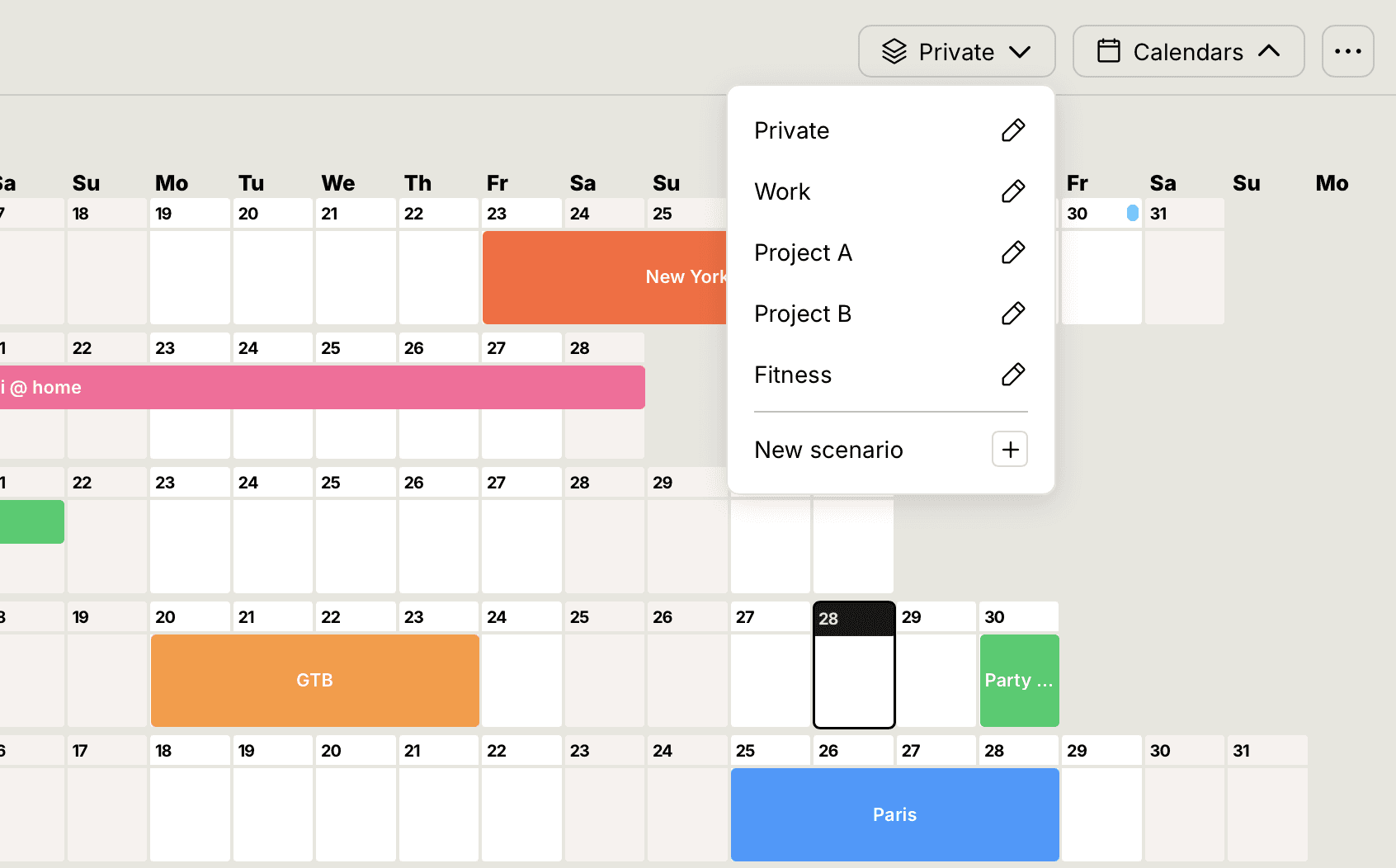
What's the difference between a calendar and a long-term planning tool? A calendar answers "what happens on this date?". A long-term planning tool answers "what does my year look like?", showing multiple months at once, duration rather than just dates, and overlaps and gaps you can actually see.
What does long-term planning need that calendars don't provide? Seeing multiple months at once, understanding duration, recognizing overlaps and gaps, and making trade-offs visible. These aren't extras, they're the foundation, and day-based tools leave them unmet.
👉 See what it looks like to plan around time spans, not days - start with AnnuCal.